ID.8

A co-creative studio for visual storytelling.

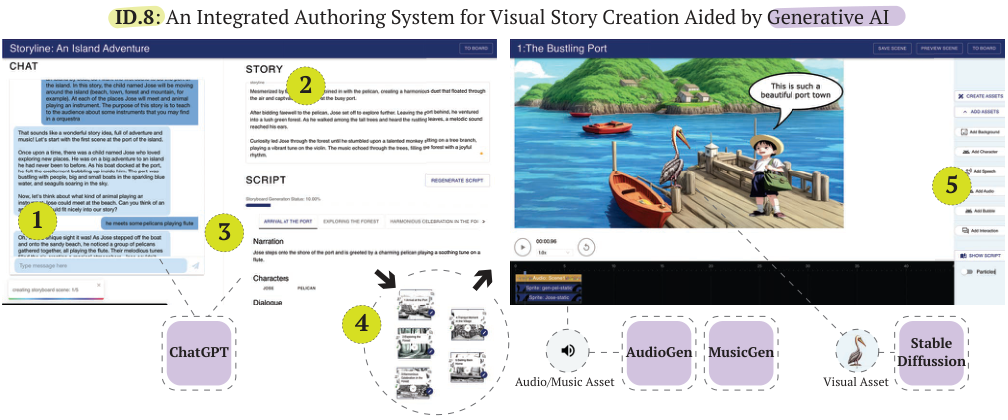
ID.8 is a multimodal authoring tool for people who have ideas for visual stories but not the training to write, illustrate, score, and edit them alone. The system keeps the human in charge while AI helps draft narrative beats, images, and audio across one continuous workflow.

ACM TiiS 2024 Creative Tools Human-AI Co-creation Open Source
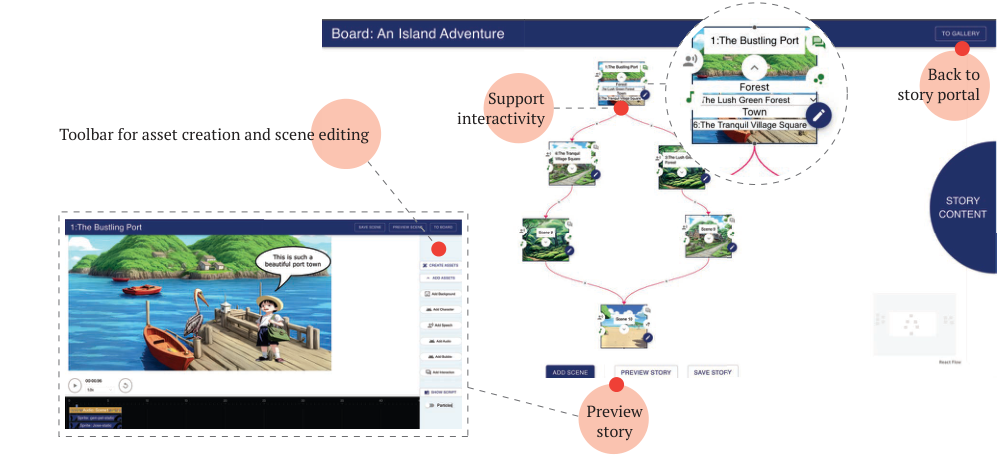
ID.8 overview: collaborative visual storytelling with AI.

A unified creative loop: authors seed intent, the system proposes, and authors keep curating the story world.

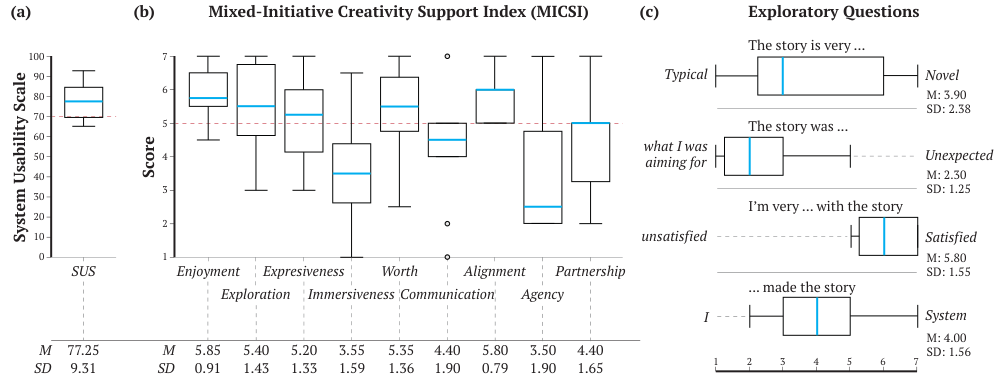
77.25
SUS usability score in the lab study
17
Participants across lab and week-long field studies
6,142
Downloads since publication
43
Citations for the ACM TiiS journal paper

A creative tool for people who do not already know every medium.

Visual storytelling usually requires a stack of specialized skills: writing, image-making, sound design, sequencing, and editing. ID.8 collapses those steps into one authoring surface, so creators can keep momentum instead of jumping between disconnected AI tools.

One workflow

Story writing, scene organization, image generation, and audio creation happen inside a single system.

Author stays in control

The AI proposes narrative beats and assets, but people keep choosing, editing, and steering the direction.

Built for non-experts

The tool lowers the barrier for users who have ideas and domain knowledge, but not professional artistic training.
The interface keeps handing control back to the author.

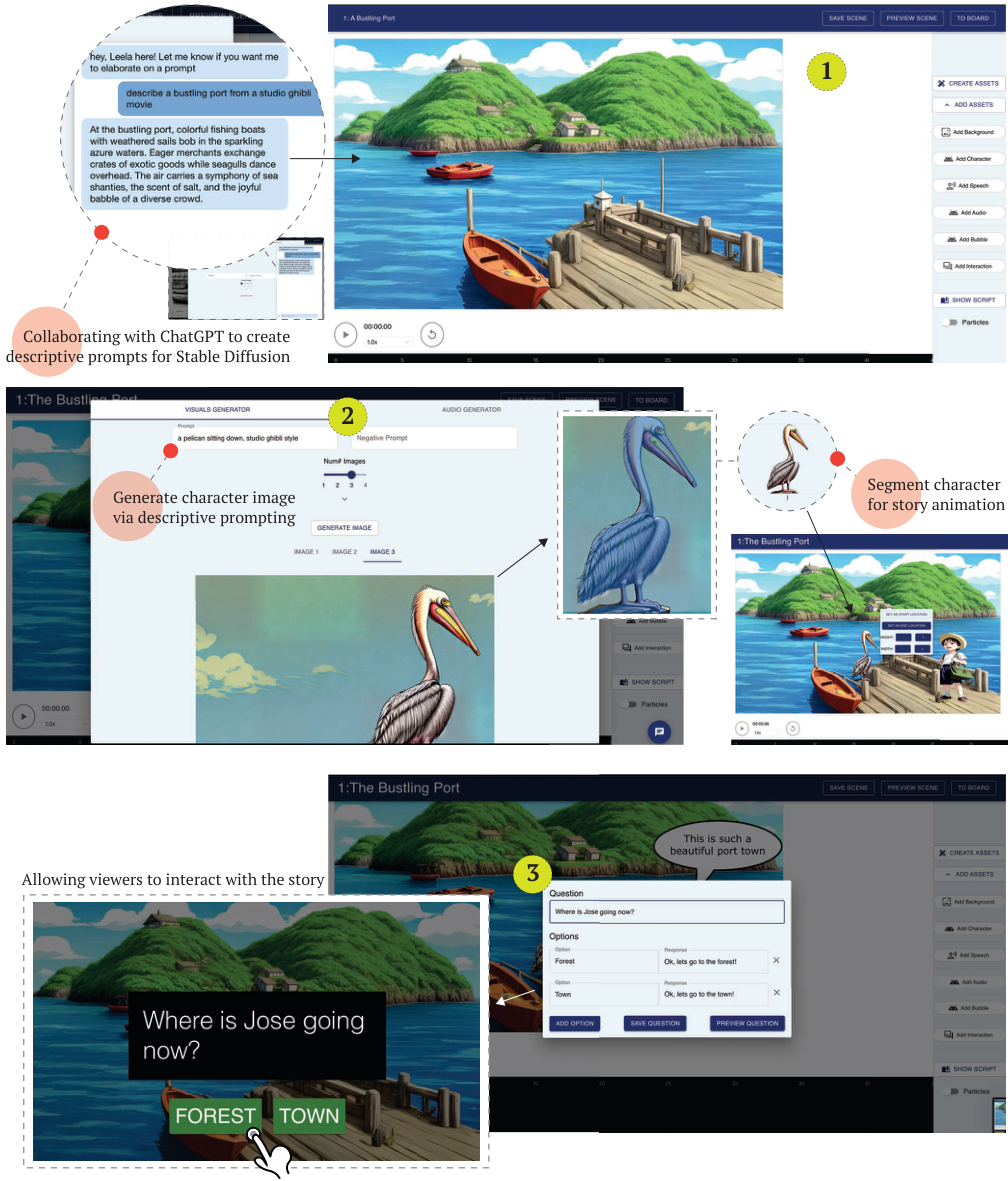
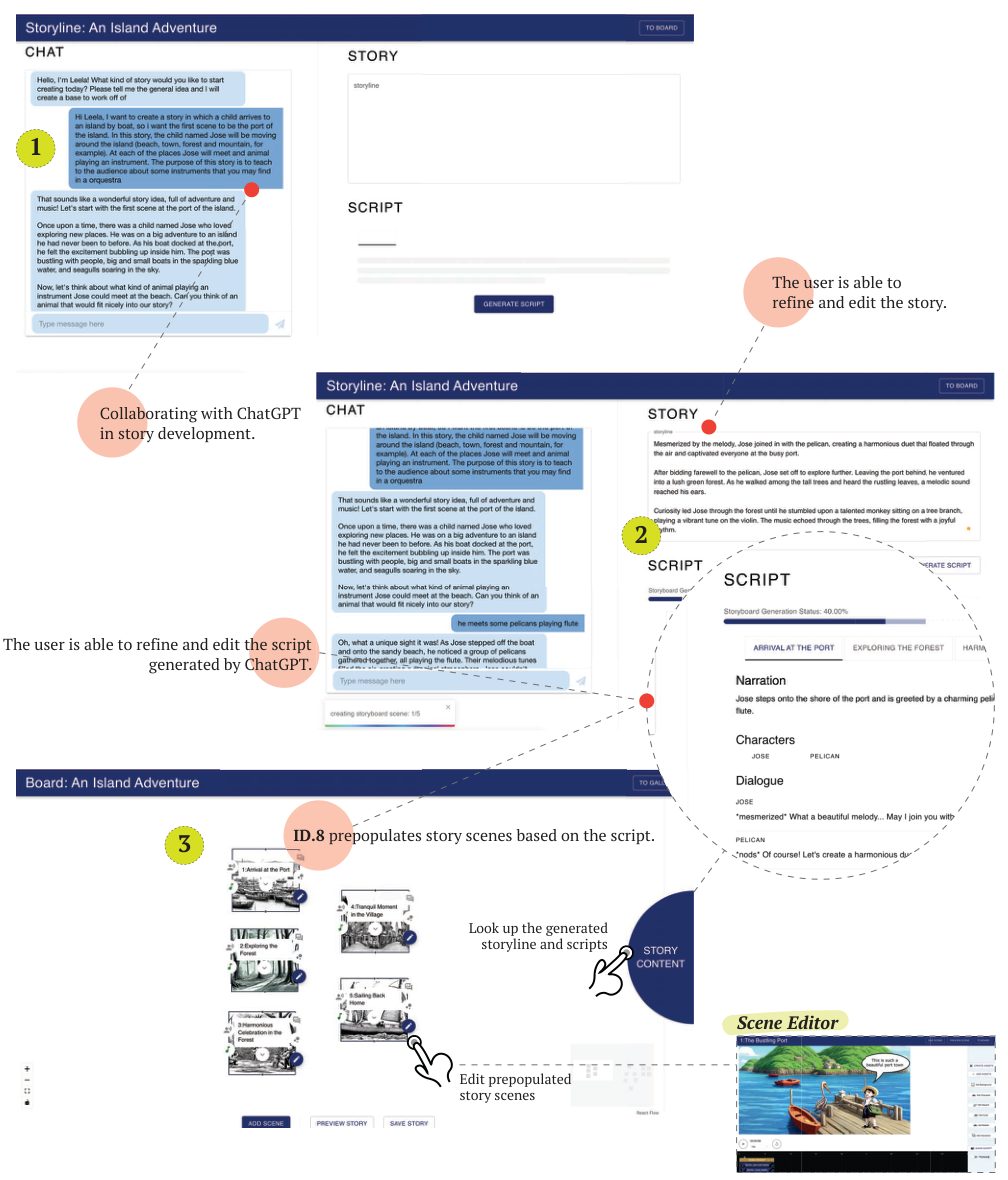
ID.8 is structured as three connected surfaces: generate the storyline, arrange scenes in a storyboard, then build visuals and audio inside each scene. The flow is intentionally sequential, but never locked down.

ID.8 story generation interface from prompt to story panels.

Storyline Creator: the author begins with intent, and the system proposes narrative beats to refine.

ID.8 storyboard interface for sequencing and editing.

Storyboard: scenes can be sequenced, swapped, and rewritten without losing the broader story structure.

ID.8 asset generation interface for characters, settings, and props.

Scene Editor: visuals and audio are generated per scene, making iteration local instead of overwhelming.

The stories feel authored, not generic.

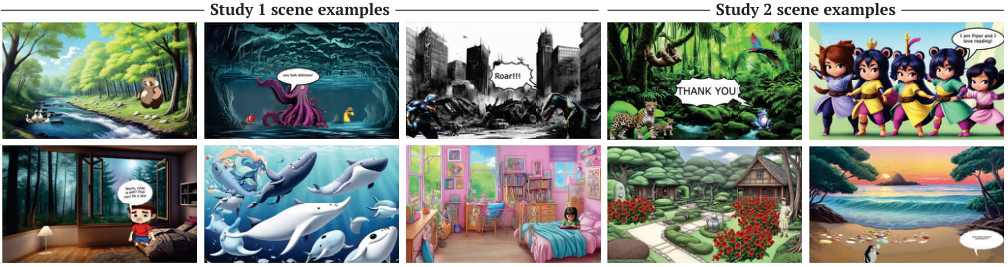
Participants produced fantasy, sci-fi, slice-of-life, and other narrative styles without artistic backgrounds. What matters here is not just that the system generates assets, but that people use those assets to express a point of view.

Additional story styles and visual directions produced with ID.8.

Different visual directions emerged across users, genres, and tones rather than collapsing to one house style.

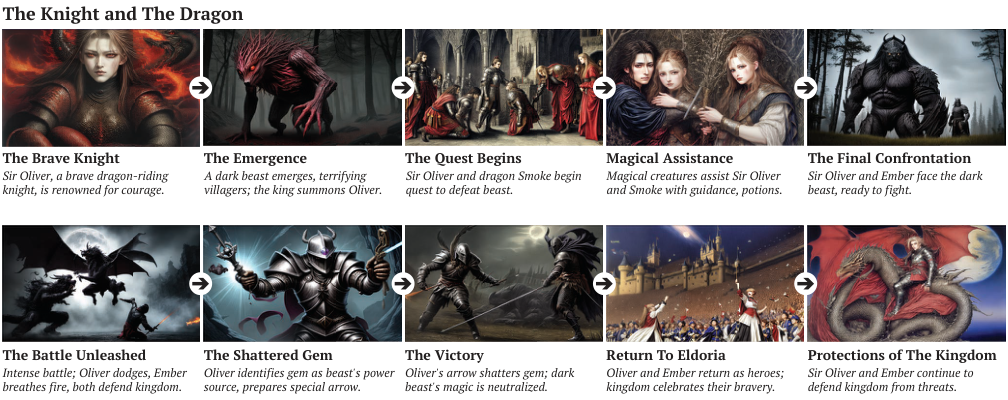
Example visual story sequence built through iterative co-creation in ID.8.

Stories are assembled through iterative proposals and author choices, not one-shot generation.

Creative range Across genres

Users created stories spanning fantasy, science fiction, and everyday narrative scenarios, each with a distinct voice.

Longer-form making Field use

In the week-long deployment, participants spent hours iterating and produced multi-minute stories on their own devices.

Human authorship stays visible Core quality

The work is strongest when the AI expands options while the human keeps choosing what belongs in the story world.

The studies showed strong usability and exploration, with one clear gap.

ID.8 performed well as a usable, engaging creative tool. The weaker point was partnership: people found it helpful, but still experienced it more as a tool than as a collaborator.

ID.8 lab study results showing SUS and MICSI scores.

Lab study: SUS 77.25, with strong enjoyment, exploration, and perceived worth.

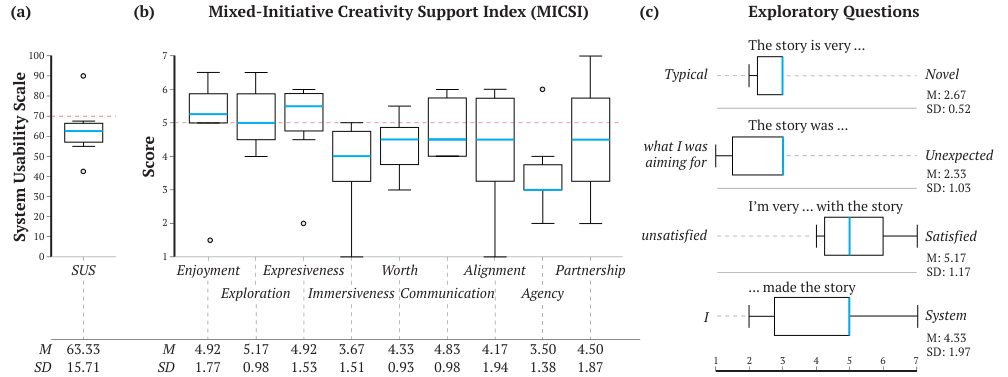
ID.8 field study results showing exploratory and satisfaction scores.

Field study: week-long usage sustained exploration and satisfaction on participants’ own devices.

Usability cleared the bar Lab

SUS landed at 77.25, putting the system comfortably in the “good usability” range for an exploratory creative tool.

Exploration was a real strength Across studies

Participants repeatedly used the system to explore directions they would not have sketched or composed manually.

Collaboration still felt thin Design gap

Partnership and immersion lagged, suggesting the next generation should feel less like a utility and more like a coherent creative partner.

"It was really helpful for quickly iterating on new ideas and exploring potential broad strokes of the story."

P8 — lab study participant

"I didn't envision it like this, but this is really cool — sometimes it took me in a new direction."

P15 — on AI-driven creative redirection

Why it matters

ID.8 suggests a useful direction for creative AI: systems that expand what people can make without taking authorship away from them. The work also produced ten design guidelines for future co-creative systems, especially around clearer AI identity, iterative feedback, and smoother multimodal workflows. That makes this project relevant well beyond storytelling, to educational media, therapy tools, and any interface where AI should help create without taking over.