Plant-Inspired Robots

Ambient robots can signal, support, and stay in the background.

Plants offer a different paradigm for HRI: one based on posture, timing, color, and atmosphere rather than interruption. Through Research through Design, this project translated plant metaphors into robotic artifacts that explore slower, quieter, and more interpretive forms of presence.

HRI 2026 Research through Design Ambient HRI Open Source
Plant-inspired robot design process spanning plant references, robotic artifacts, and participant imaginaries.

The full arc: plant references, ambient robotic artifacts, and the speculative futures participants imagined from them.

Primitives Prototypes Imaginaries Design Workshops

Plants make a strong interaction model precisely because they do not demand attention.

Much of HRI borrows from people or animals, leading to expressive forms that ask for frequent acknowledgment. Plant metaphors suggest another route: robots that shape atmosphere, invite interpretation, and communicate gradually through the periphery.

Ambient presence

Expression can unfold through timing, posture, and material shifts instead of alerts, speech, or facial reaction.

Interpretive space

Plant-like robots leave more room for people to read intent and emotion into subtle movement without feeling judged.

Designerly contribution

The project builds a vocabulary for an HRI category that is quieter, softer, and more gradual than current robot norms.
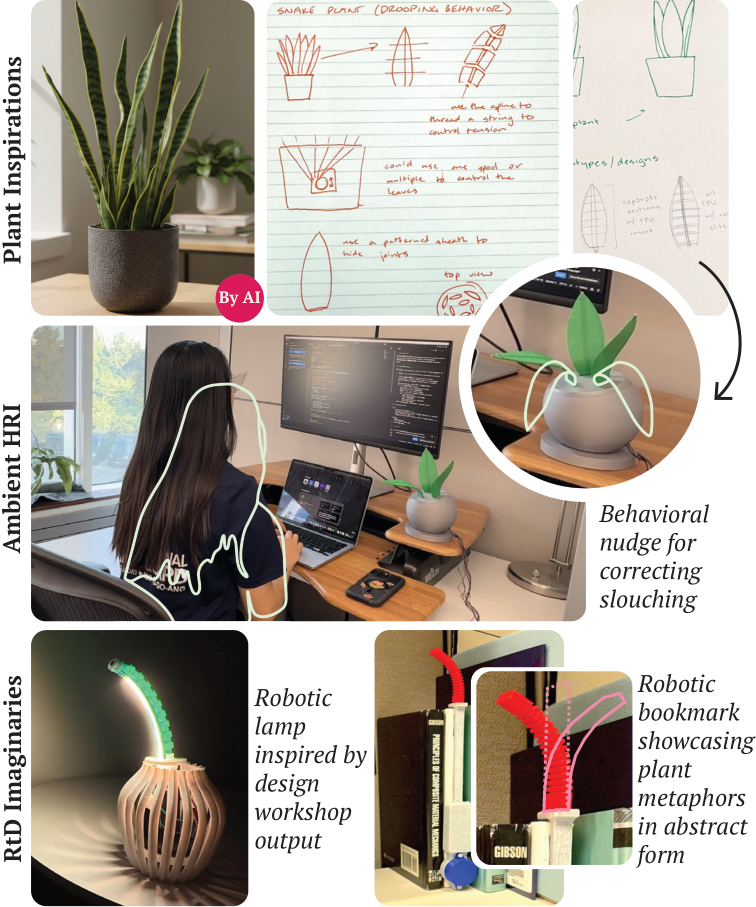
The expressive vocabulary begins with four plant primitives.

Rather than copying plant aesthetics directly, the work isolates structural elements that carry expressive potential and then engineers them to move on plant-like timescales.

Leaf

Curling, wilting, and unfurling through a string-driven flexible mechanism.

Stem

Leaning, bowing, and swaying through a bellow-like actuation logic.

Flower

Glow, translucency, and color as expressive channels with minimal motion.

Pot

Rotation, movement, and form as a way of shaping how presence is read.

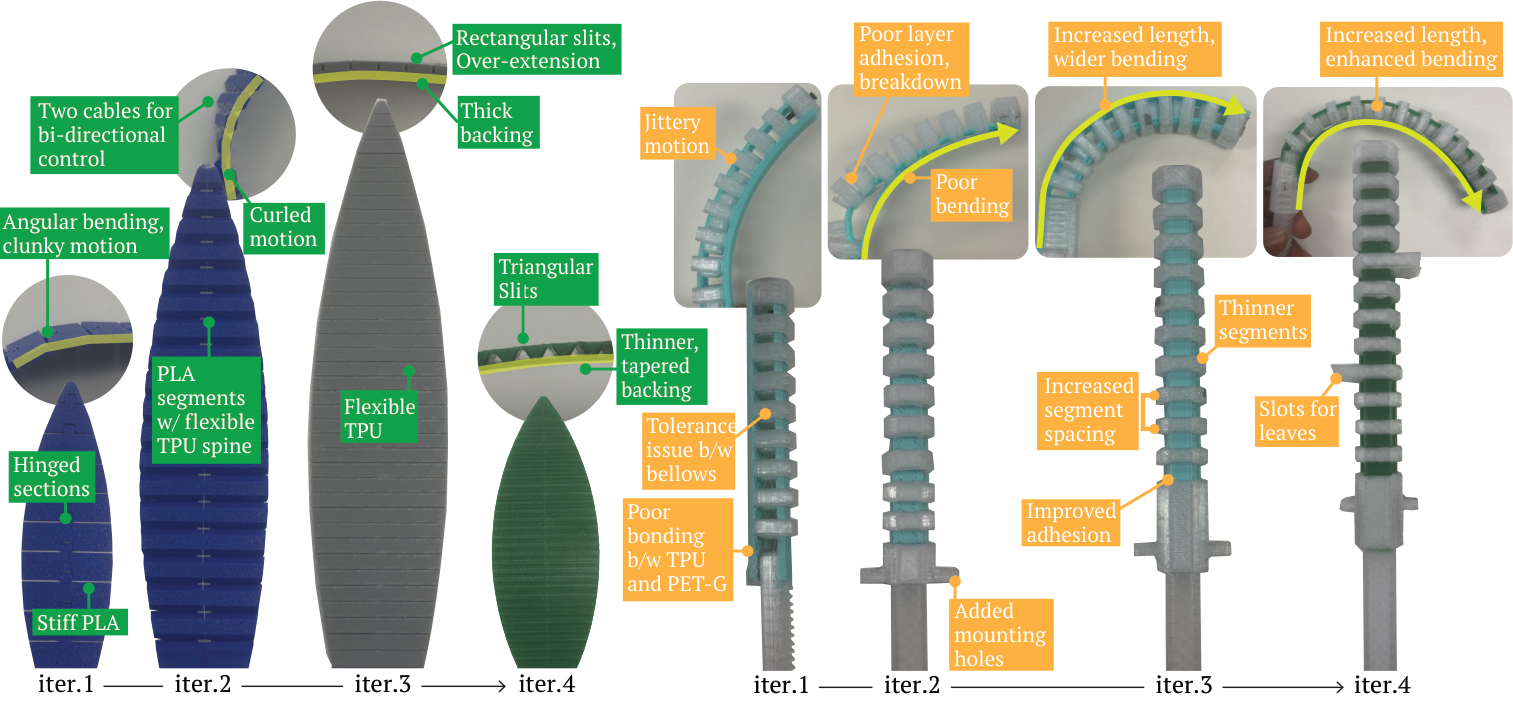
Design iterations of plant-inspired leaf and stem mechanisms.

Leaf and stem iterations across multiple cycles, moving from stiff, noisy, and literal implementations toward softer and quieter motion.

Four prototypes, each opening a different imaginary.

These artifacts are not a single product line. They are probes into how plant-like robots might inhabit desks, tables, routines, and shared spaces in more ambient ways.

Desk companion

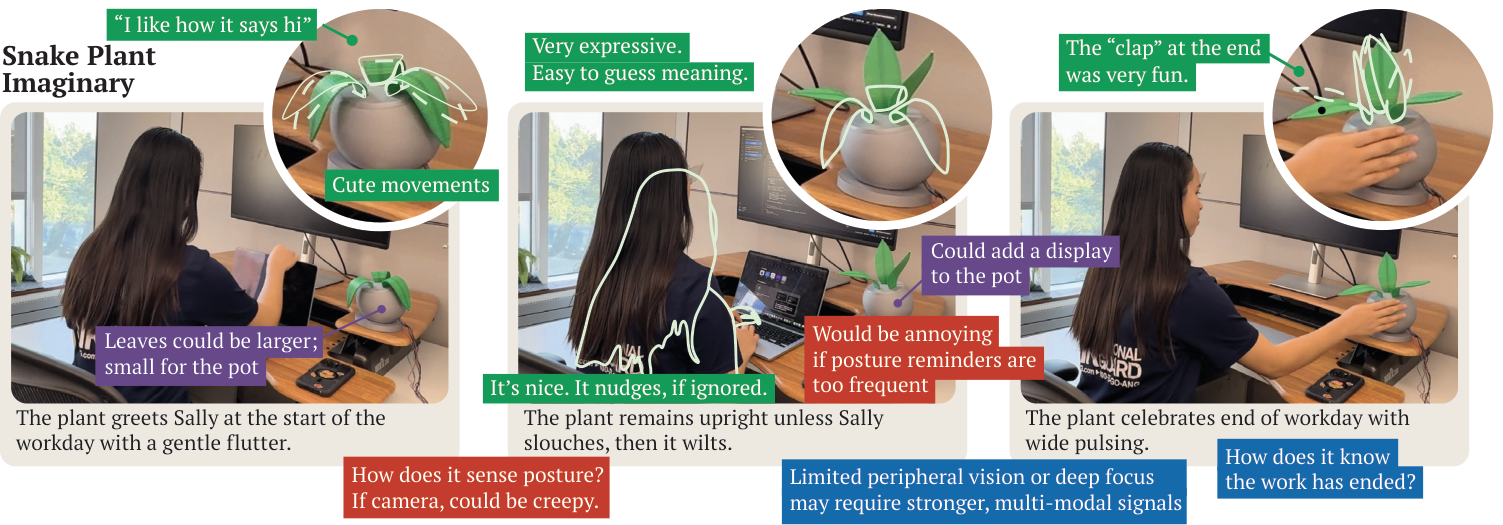
Snake Plant

A posture-aware desk object whose leaning and recovery suggest long-term correction rather than instant feedback.

Imaginary

A plant that droops gently as you slouch and revives when you reset, making the cue feel ambient rather than disciplinary.

Social facilitator

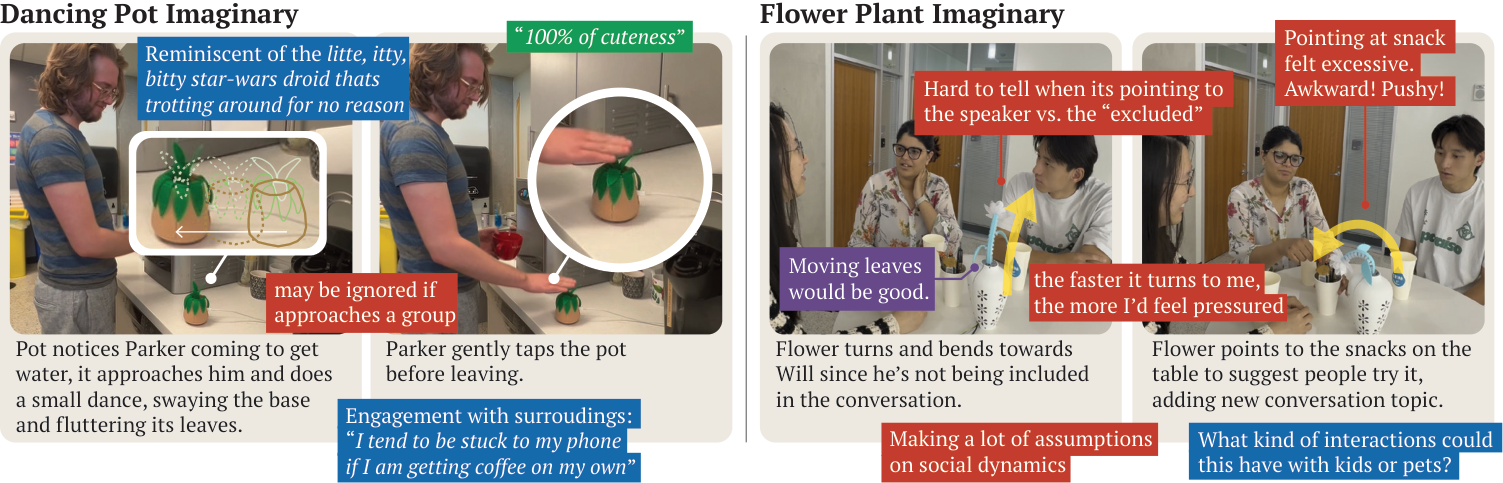
Flower Plant

A flower-crowned form using orientation and stem motion to participate in group attention and conversational flow.

Imaginary

A tabletop companion that turns toward speakers, leans toward quieter participants, and gently mediates social space.

Functional gesture

Keeper Plant

A Venus-flytrap-like form whose leaves enclose, present, and protect an object as part of a routine.

Imaginary

A pill organizer that keeps medication enclosed until the right time, then slowly opens and pulses to invite action.

Mobile presence

Dancing Pot

A moving pot that pairs locomotion with delicate leaf motion to create playful presence without demanding engagement.

Imaginary

A water-cooler companion that approaches, performs a small dance, and turns a routine moment into ambient social presence.

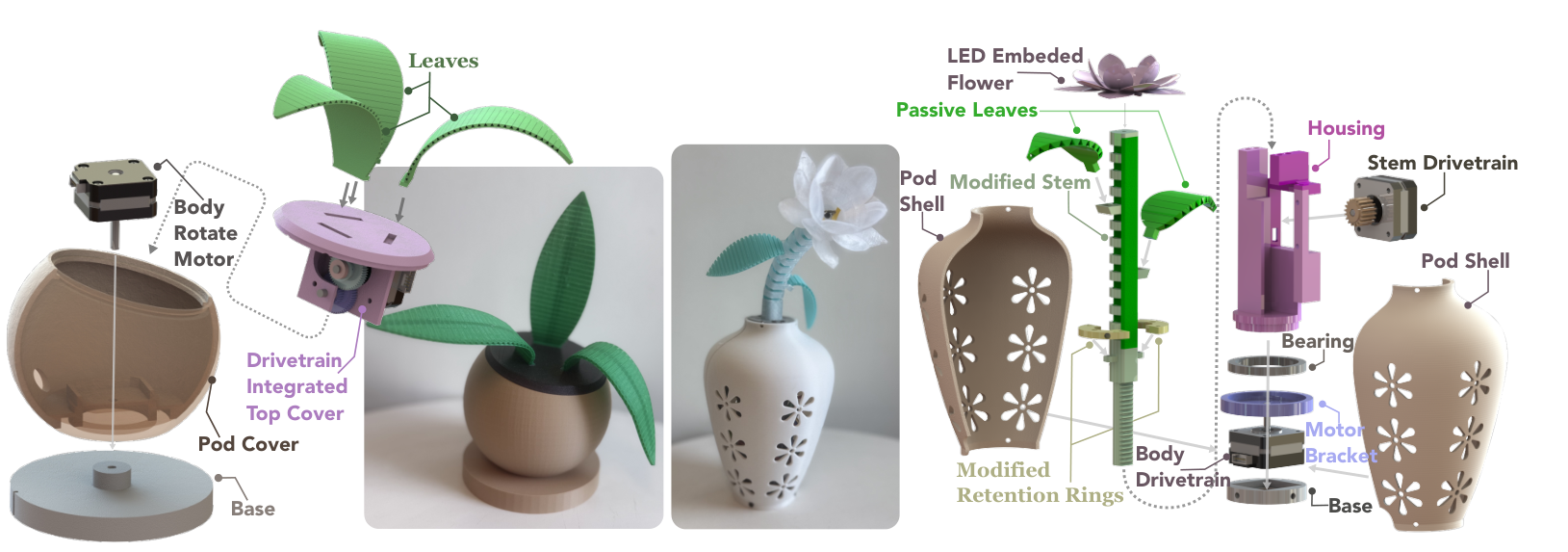
Exploded views of the Snake Plant and Flower Plant prototypes.

Exploded views reveal how the artifacts are built from expressive leaves, stems, flowers, pots, and drive systems rather than sealed black-box forms.

The project used workshops to surface reactions, critiques, and new futures.

Participants were not asked whether they simply liked the robots. They were asked to annotate, modify, and push them into new contexts, turning the artifacts into design prompts rather than finished answers.

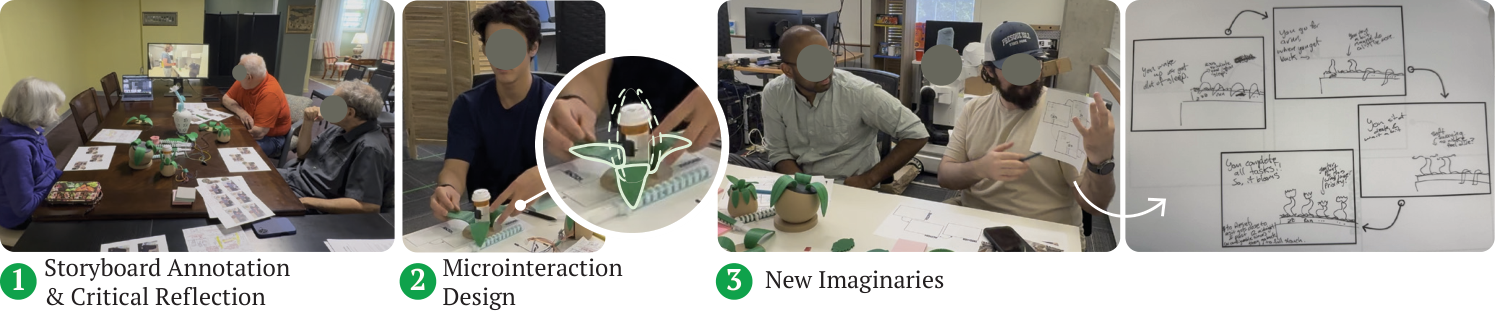
Three-phase workshop process covering annotation, microinteraction design, and speculative imaginaries.

The workshop flow moved from critical reflection to puppeteered microinteraction design to fully new speculative imaginaries.

Storyboard annotation Reflection

Participants marked what felt expressive, unclear, intrusive, or promising in the original prototype stories.

Microinteraction design Bodystorming

Pairs modified existing interactions and puppeteered the prototypes to test rhythm, timing, and gesture in the body.

New imaginaries Speculation

The richest output came when participants invented entirely new settings and robot roles beyond the initial concepts.

Participants treated the robots as things to critique, reframe, and extend.

The annotated portfolios show why this work matters as design research: people did not only react to the artifacts, they actively re-authored them through critique and speculation.

Annotated Snake Plant storyboard with participant comments and extensions.

Snake Plant annotations mixed delight, practical critique, and concern about sensing, showing how ambient artifacts still need to justify their footprint.

Annotated portfolios for the Dancing Pot and Flower Plant.

Dancing Pot and Flower Plant elicited both affection and pushback, clarifying where ambient presence crosses into awkwardness or overreach.

"I don't want more clutter. I have enough on my desk… why do I need another thing?"

P9 — on why a robot must justify its footprint

"Slouching for 5 seconds is ok, slouching for 1 hour is a problem. The leaf could look weaker and weaker, like it's dying — then when you correct, it revives."

P1 — on temporal accumulation as the right nudge model

Family garden

A set of plant robots reflecting the emotional atmosphere of a household through drooping, curling, and perking up.

Long-distance presence

Paired plant robots in separate locations that mirror simple gestures, sharing presence without a call or screen.

Sleep and time hygiene

A plant-like lamp that dims and shifts posture gradually as evening progresses, nudging toward rest through atmosphere.

Habit garden

A set of plant artifacts that grow or droop with routines, making progress legible through plant-like change rather than numbers.

Four axes distill the contribution into a reusable design vocabulary.

The work ends not with rules, but with tensions designers will need to navigate when working with plant metaphors in HRI.

Axis 1

Situating Presence

Plant-like robots need to justify their footprint through multiplicity of role, personalization, and ecological fit.

Axis 2

Expressive Palette

Meaning emerges through a delicate mix of interpretability, subtle motion, ambient visibility, and perceived liveliness.

Axis 3

Rhythms of Expression

Gradual accumulation, layered timing, and intentional non-reactivity matter as much as overt gestures.

Axis 4

Shapes of Presence

Abstraction, scale, materiality, and engineering constraints all shape how believable and useful plant-like robots can be.

Why it matters

Plant-inspired robots suggest a new HRI category: artifacts that support, signal, and shape atmosphere without behaving like assistants that constantly demand attention. The prototypes, workshop outputs, and design axes together create a vocabulary for building that category more deliberately.